 The Avenue of the Righteous
About The Avenue of the Righteous
During the Holocaust, there were Gentiles who risked their lives to save the Jews from this Holocaust. As Pierre Sauvage describes, "They were, for the most part, seemingly ordinary men and women who could not accept the idea that there was nothing they could do." They hid entire families or provided the means of escape for many; they protected children by "adopting" them, they used whatever means were necessary to defy the Nazi murderers; they were the Righteous.
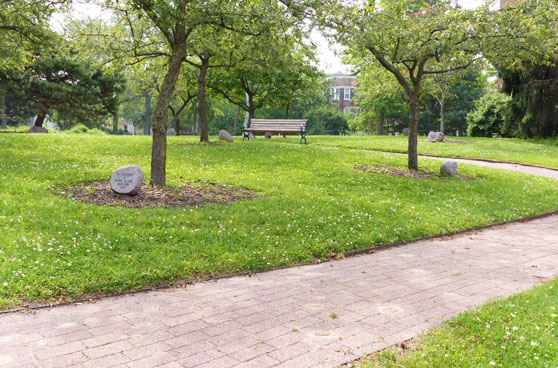
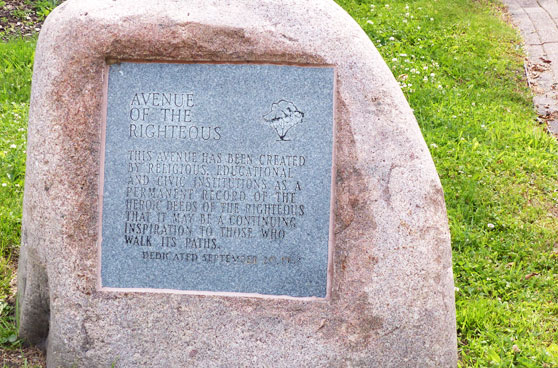
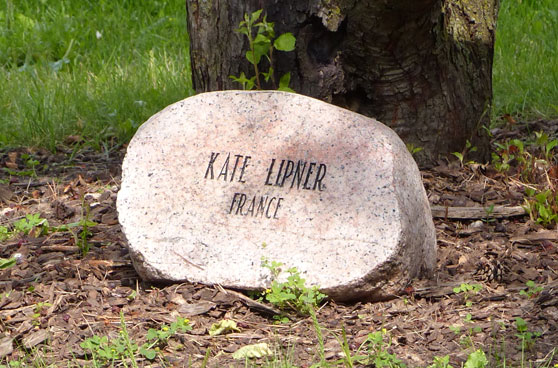
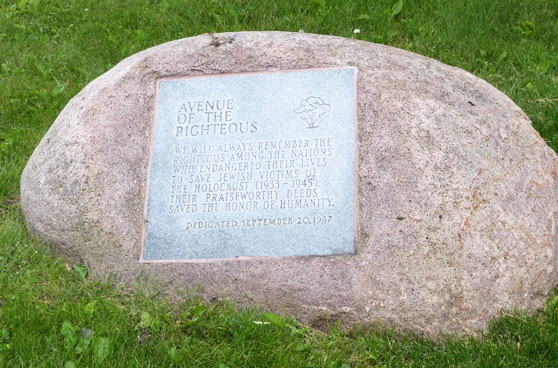
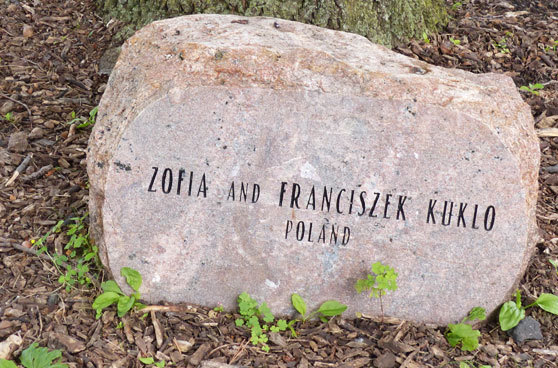
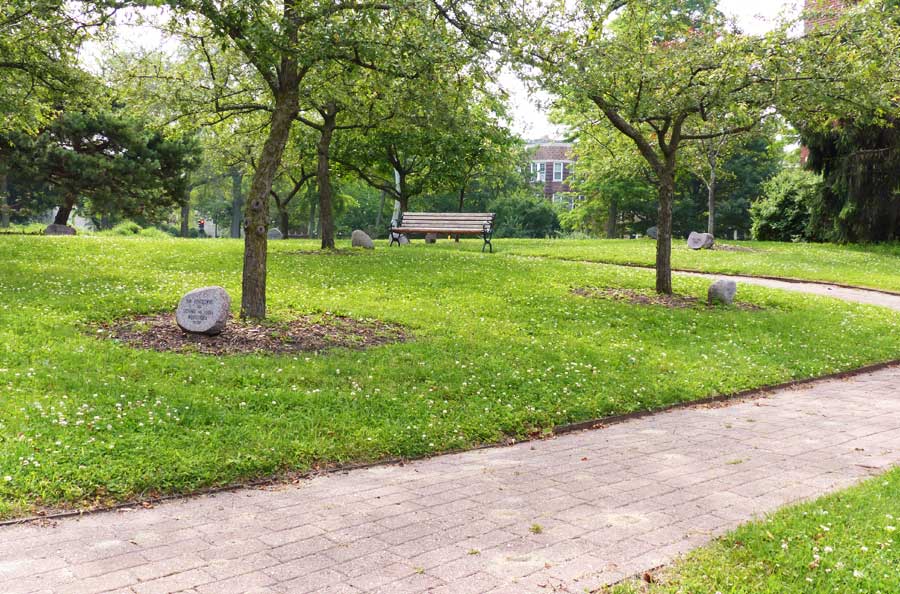
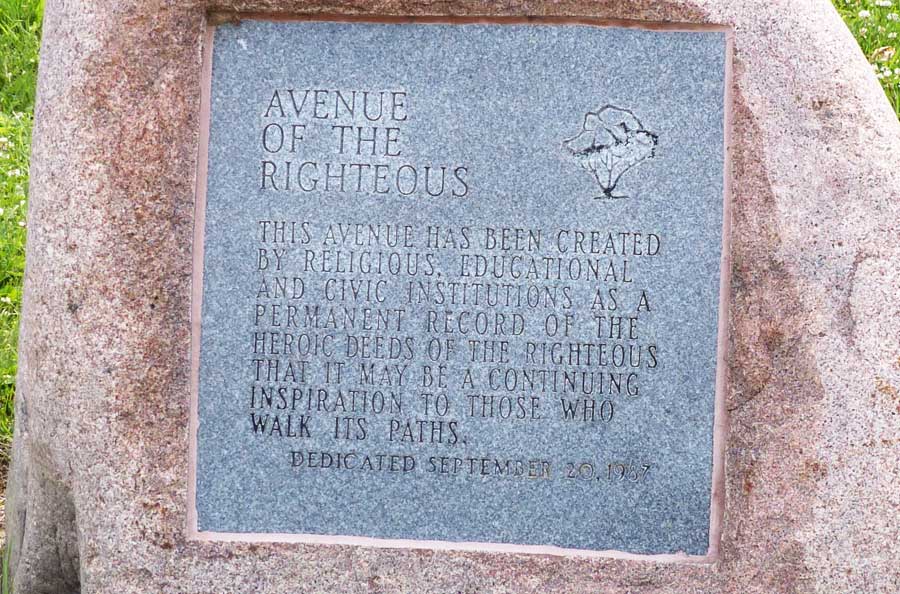
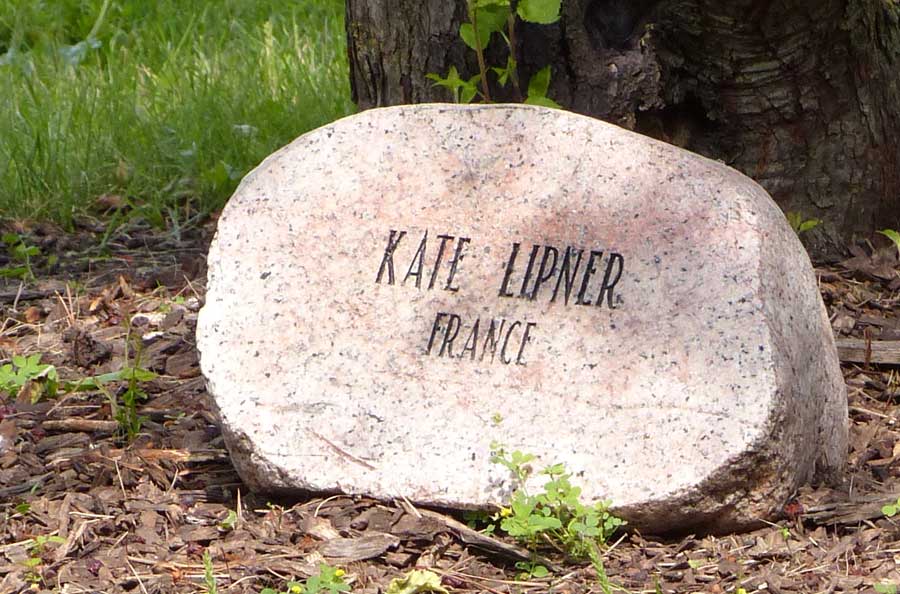
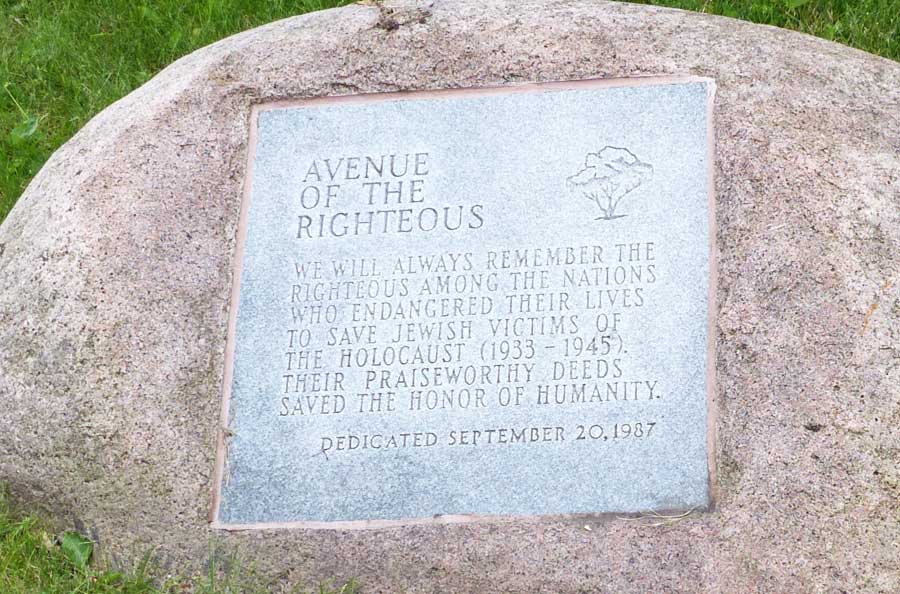
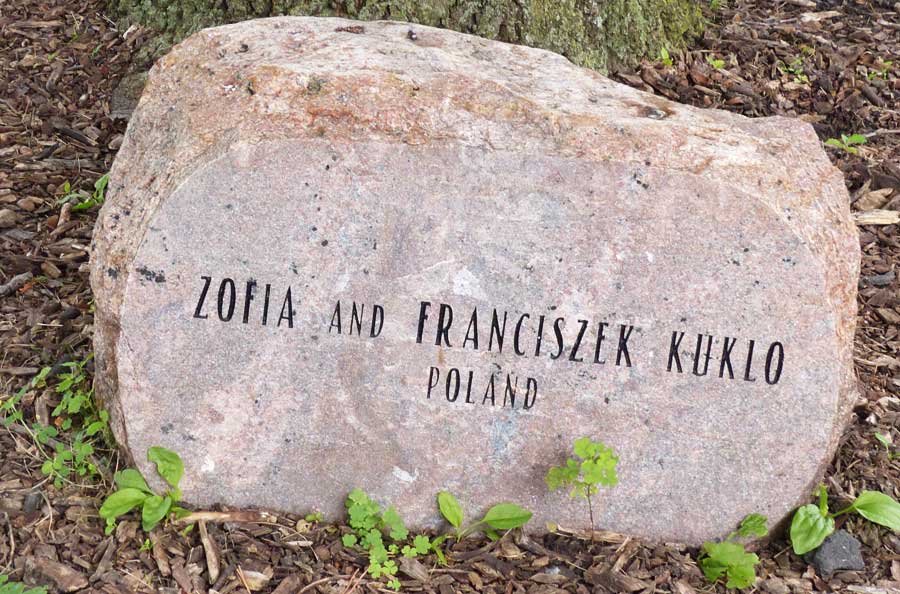
Click on the large image. Photography by Lori Swerdlow finishedfinely.com
In Israel a memorial to the victims of the Holocaust, Yad Vashem, is approached through an avenue of trees known as the Avenue of the Righteous Gentiles. At the base of each tree a small plaque testifies to the heroism of that person whose action saved a Jewish life. To walk this path is to be surrounded by symbols of all that is noblest in mankind. It is an exalted atmosphere.
In Glencoe, Illinois, in the summer of 1984, the idea of creating another Avenue of the Righteous was born. A call was sent out to Christian, Jewish and Baha'I congregations for a meeting that set in motion one of the most significant interfaith projects ever attempted on the North Shore: the identification of and tribute to non-Jewish heroes of the Holocaust.
The response was immediate. Support grew as more congregations, public schools and civic organizations joined in. Members of the clergy and lay persons came together in a common effort which soon became a reality.
By 1986 the Evanston City Council had unanimously approved development of the Avenue of the Righteous on a site in Ingraham Park adjacent to the Evanston Civic Center. The design was complete, sufficient funds had contributed and construction began.
In 1987, the Avenue of the Righteous was dedicated.
Who founded the Avenue of the Righteous?
While there is no single person for whom credit is due, there are some who broke ground. Congregation Am Shalom Rabbi Harold Kudan was looking at a newspaper and saw a story about the death of a Righteous Gentile who lived in the Chicago area. No one had noticed his deeds on behalf of the Jews. Rabbi Kudan asked Ruth Goldboss, a civil and human rights activist in his synagogue, a key question -- why have we forgotten to thank them? The question energized Ruth who knew her organizational limitations. At a 1985 planning meeting for the Avenue of the Righteous, Ruth asked her friend Maureen Roin for help. Maureen, a diligent organizer, and her husband Dan Roin, a well respected attorney, agreed to participate. Behind the scenes, Dan Roin offered careful legal judgment and skill. Harold Kudan, Ruth Goldboss, and Maureen and Dan Roin erected the foundation that became the Avenue of the Righteous. Their consistent efforts resulted in the thanks to Righteous Gentiles who through their gooddeeds upheld the Talmudic entreaty “to respect the honor of humanity."
Introduction to Board Members & Supporters
The Avenue of the Righteous endures due to the voluntary efforts of its devoted Board members, community supporters, and a wide variety of Inter-religious individuals and groups who firmly believe that to be one’s “brother” is to recognize good and work actively to promote justice.
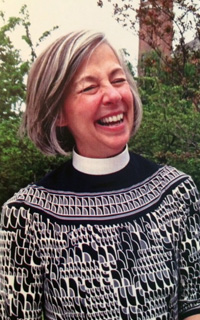
Avenue Board member Reverend Betty Landis (EOM)
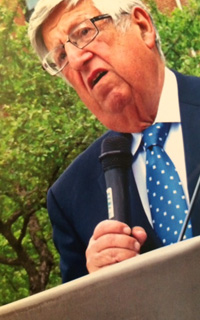
Avenue co-founder Harold Kudan
speaking at the June 1, 2014 Rededication.
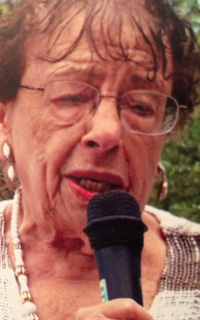
Former Mayor Lorraine H. Morton
Mayor Morton speaking at the June 1, 2014 Rededication. The Avenue's premier supporter.
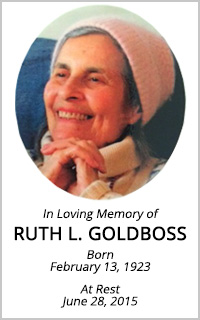
In Memory of
Avenue co-founder Ruth Goldboss
A champion of social justice and equality, her spirit lives in the work of the Avenue of the Righteous.
Our Sponsors
Am Shalom Congregation, Glencoe
Am Yisrael, Northfield
Beth Emet, Synagogue, Evanston
Beth Hillel, Wilmette
Catholic Theological Union, Chicago
Christ Church, Winnetka
Christ United Methodist Church, Deerfield
Church of Christ, Wilmette
Church of Jesus Christ of Latter Day Saints, Wilmette
Common Ground, Deerfield
Community Church of Wilmette
Congregation Beth Shalom, Northbrook
Congregation B'Nai Tikvah, Deerfield
Congregation Hakafa, Glencoe
Congregation Solel, Highland Park
Evanston Ecumenical Action Council
Evanston Human Relations Commission
Evanston Ministers Alliance
Evanston Township High School
Faith. Hope and Charity Church, Winnetka
First Baptist Church, Evanston
First Congregational Church, Evanston
First Congregational Church of Wilmette
First Presbyterian Church, Deerfield
First Presbyterian Church, Evanston
First Presbyterian Church, Wilmette
First United Methodist Church, Evanston
Glencoe Baha'i Community
Glencoe Public Schools
Deerfield High School
Highland Park Presbyterian Church
Immanuel Lutheran Church, Evanston
Institute for Catholic-Jewish Education, Chicago
Jewish Reconstructionist Synagogue, Evanston
Lakeside Congregation for Reform Judaism, Highland Park
Mikdosh El Hagro Hebrew Center, Evanston
Mount Zion Baptist Church, Evanston
New Trier Township High School, Winnetka
North Shore Congregation Israel, Glencoe
North Shore United Methodist Church, Glencoe
North Suburban Synagogue Beth El, Highland Park
Sacred Heart Church, Winnetka
St. Athanasius Roman Catholic Church, Evanston
St. Augustine's Episcopal Church, Evanston
St. Francis Xavier Church, Wilmette
St. Giles Church, Northbrook
St. John's Lutheran Church, Wilmette
St. Joseph's Catholic Church, Evanston
St. Mark's Episcopal Church, Evanston
St. Mary's Roman Catholic Church, Evanston
St. Nicholas Roman Catholic Church, Evanston
St. Paul's Lutheran Church, Evanston
Skokie Valley Baptist Church, Wilmette
Temple Jeremiah, Northfield
Trinity Church of the North Shore, Wilmette
Trinity Episcopal Church, Highland Park
Trinity Lutheran Church, Evanston
Trinity United Church of Christ, Deerfield
Union for Reform Judaism, Chicago
Unitarian Church of Evanston
U.S. Holocaust Memorial Council, Washington, D.C.
Wilmette Baha'i Community
Wilmette Lutheran Church
Winnetka Congregational Church
Winnetka Interfaith Council
Winnetka Public Schools